
Why do we sometimes become more interested in what a place no longer contains than in what is standing in front of us?
I once photographed what was there. Increasingly, I find myself photographing what isn’t.
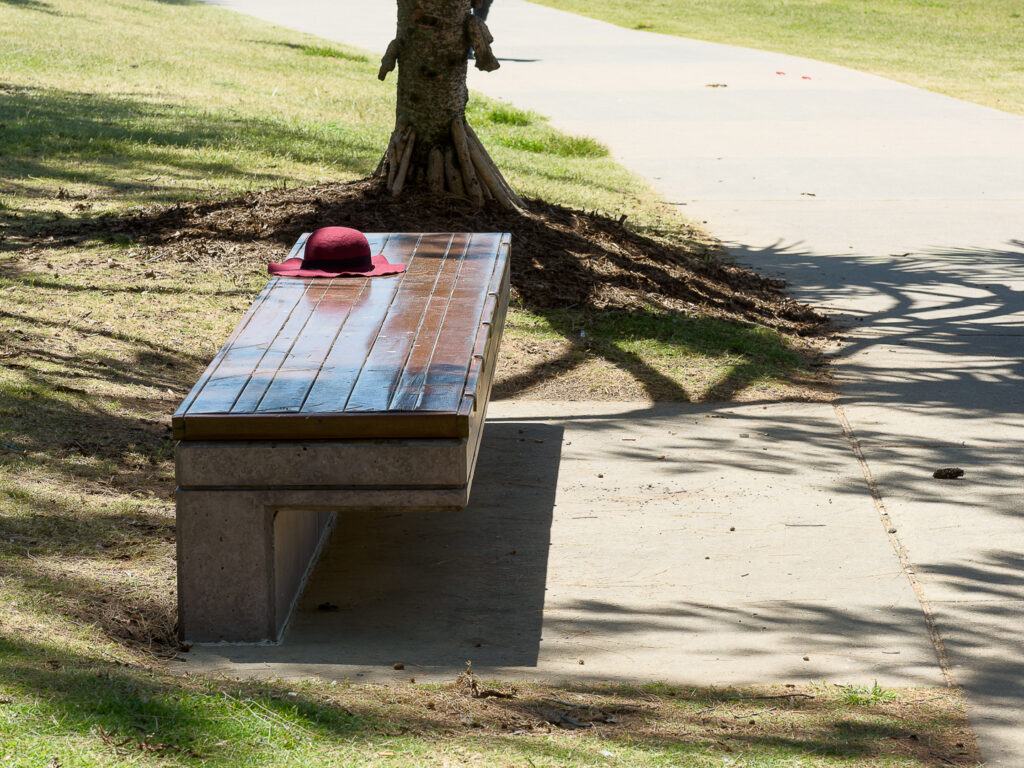
Recently, we stopped at Surfers Paradise to take some photographs of the beach and the people enjoying themselves. As we walked towards the beach, I glanced to my left and noticed a bench.
There was a red hat sitting on it.
No one was nearby.
Someone had left the hat there, but who?
Without really thinking, I stopped, lifted my camera, framed the scene, and pressed the shutter. Then I walked on.
When I was younger, I probably would have photographed the bench if people were sitting on it. If it was empty, I would have kept walking. A hat left behind would hardly have interested me.
Maybe ageing doesn’t only change what I know.
It also changes what I notice.
When the World Was Full
Looking back, different things attracted my attention when I was younger.
I enjoyed busy streets and the sense that most of my life was still ahead of me.
My photographs captured spectacular landscapes, partly to record that I had been there. I photographed remarkable architecture that caught my eye and historical places that introduced me to lives lived long before I was born.
Having my photograph taken when I graduated was exciting. It was something to treasure. Another milestone reached.
My attention was guided by what I had been taught, what I was learning and what I was experiencing for the first time.
Life itself was largely about what was happening next.
There was more future than past.
Over the years, my attention slowly changed as I matured and my interests developed. Inevitably, more of my life began to sit behind me rather than ahead of me.
That doesn’t mean I’ve started looking backwards or waiting for life to slow down. I still look forward as though there is plenty more life to come.
But perhaps I now notice things according to what life has taught me to look for.
Then You Begin Noticing the Gaps
When I look around my neighbourhood, or return to familiar places, I increasingly notice what has changed and what has disappeared.
The boarded-up shop that once thrived with customers.
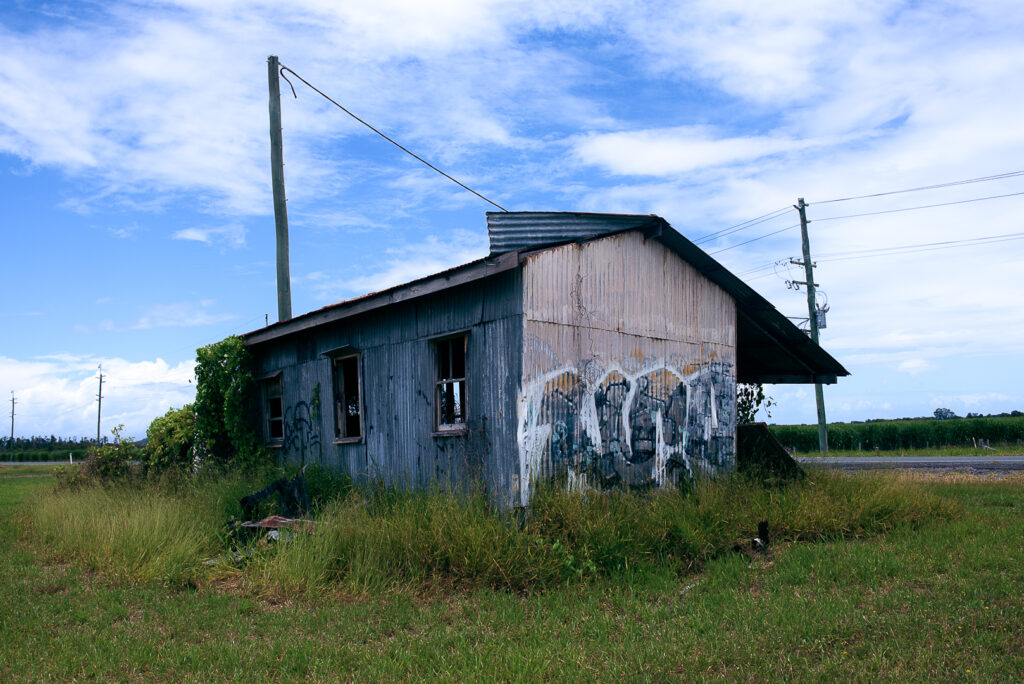
An abandoned building with nature beginning to reclaim it.
The jetty that was once a favourite place to fish, now closed because parts of its structure have decayed.
Faded lettering and worn paint.
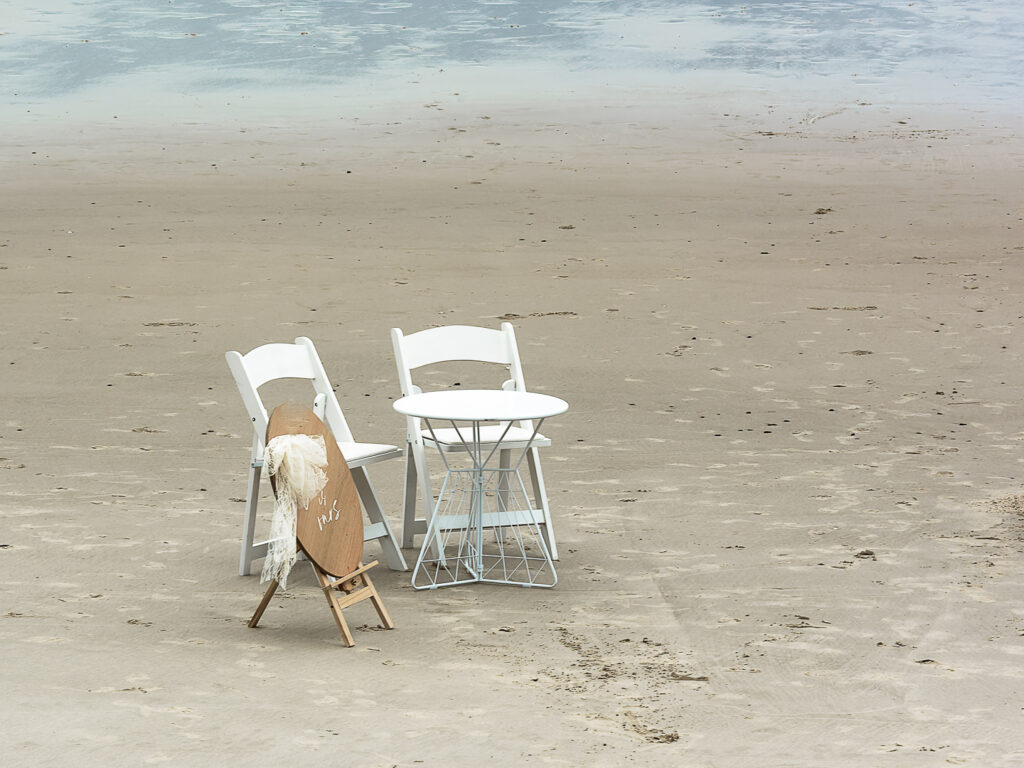
The empty chair where someone once sat.
The way a storm can close a river mouth and create a new opening a few miles down the coast.
The old building being torn down to make way for concrete and glass.
Evidence of the past isn’t necessarily beautiful.
But it tells me that something happened here.
Someone cared about this once.
Someone built it, painted it, sat there, worked there, walked through that doorway.
And now they’re gone.
Absence Has a Strange Presence
Over the past few days, I’ve been thinking about how something that isn’t there can become the thing I notice most.
Perhaps absence becomes visible precisely because something remains.
It might be the now-empty chair at the dining table.
The photograph of an annual get-together with someone missing from it.
The empty shop in the local shopping strip where we once bought our fish and chips.
The stump left behind after a tree has been removed.
A room after the furniture has gone.
The room, shop or chair may be empty, but each carries a sense of something that once was.
For me, emptiness and absence aren’t quite the same thing.
Emptiness simply means nothing is there.
Absence means I sense that something, or someone, once was.
And somehow that changes the way I see the space they left behind.
Photography Changed When I Stopped Asking “What’s Here?”
When I first became interested in photography, I looked for things to photograph.
The famous landmark. The sculpture. The heritage building.
I wanted to document family events and record life’s milestones.
My first car.
My wedding.
Milestone birthdays.
Christenings.
When travelling, there was almost a checklist of places that had to be photographed. If someone suggested somewhere to visit, one of my first questions was, “What can I photograph there?”
That was simply how I looked at things then. There was nothing wrong with it. It reflected the stage of life I was in.
As the years passed, I accumulated more life experience. My photography changed with me.
Eventually, I stopped asking:
What is there to photograph?
And began asking:
What happened here?
That small change in the question changed what I photographed.
An abandoned house isn’t merely architecture.
A weathered bench isn’t merely street furniture.
An old structure beside the water isn’t merely picturesque decay.
Photography becomes less about recording an object and more about noticing the traces of human presence.
Perhaps We Need a Past Before We Can See One
I think experience gives us a reference point.
When I was twenty, I hadn’t yet accumulated decades of departures.
Now I have seen places change.
Businesses disappear.
Houses demolished.
People move away.
Relationships evolve.
Parents and friends grow older.
Parts of my own life disappear.
So when I encounter something weathered, abandoned or empty, perhaps I instinctively understand something I couldn’t fully understand when I was younger:
Everything has a before and an after.
Perhaps that’s why traces have become more interesting to me.
I’ve acquired traces of my own.
The Photograph Doesn’t Have to Tell Me What Happened
One of the strengths of photographing absence is that I often don’t know the story.
And perhaps I don’t need to.
Who sat on the bench?
Who lived in the abandoned house?
Why did the shop close?
What happened to the old structure?
I could research the answers.
But sometimes knowing would actually diminish the photograph.
Because uncertainty leaves space for the viewer.
It allows someone else to bring their own memories and experiences to the image. The photograph stops being only about the place I photographed and becomes, at least partly, about something they have known too.
What Isn’t There Can Tell Us What Matters
Absence has taught me something unexpected.
Sometimes I don’t fully understand something’s significance until it changes or disappears.
A familiar building.
A routine.
A voice.
A gathering place.
An ordinary part of a landscape.
Photography cannot prevent any of those things from disappearing.
But perhaps it can encourage me to pay attention while they’re still here.
To notice the ordinary things I assume will still be there tomorrow.
To look more carefully at what is here now.
Looking Again
I think again about that red hat.
It is still sitting on the bench in my photograph, waiting for its owner.
The bench is still waiting for someone to sit down.
Nothing dramatic happened in that scene. Perhaps the owner returned a few minutes later, picked up the hat and walked away.
I’ll never know.
But I noticed it.
Years ago, I probably wouldn’t have.
The bench hasn’t changed.
The idea of an abandoned hat hasn’t changed.
I have.
And my photography has changed with me.
Perhaps getting older hasn’t taught me to see more.
Perhaps it has taught me to see what I once overlooked.
And to understand that sometimes what isn’t there can tell us as much about a life, a place, or a moment as what remains.
Originally published in Full Frame, The Art of Photography