How an afternoon photographing rocks became a three-year creative journey combining photography, symbolism and lyric poetry.
An Unexpected Beginning
I had no intention of creating a photobook when Marie and I visited Mooloolaba Beach in February 2021. We were holidaying on the Sunshine Coast to celebrate our wedding anniversary and had taken our cameras along, as we often do.
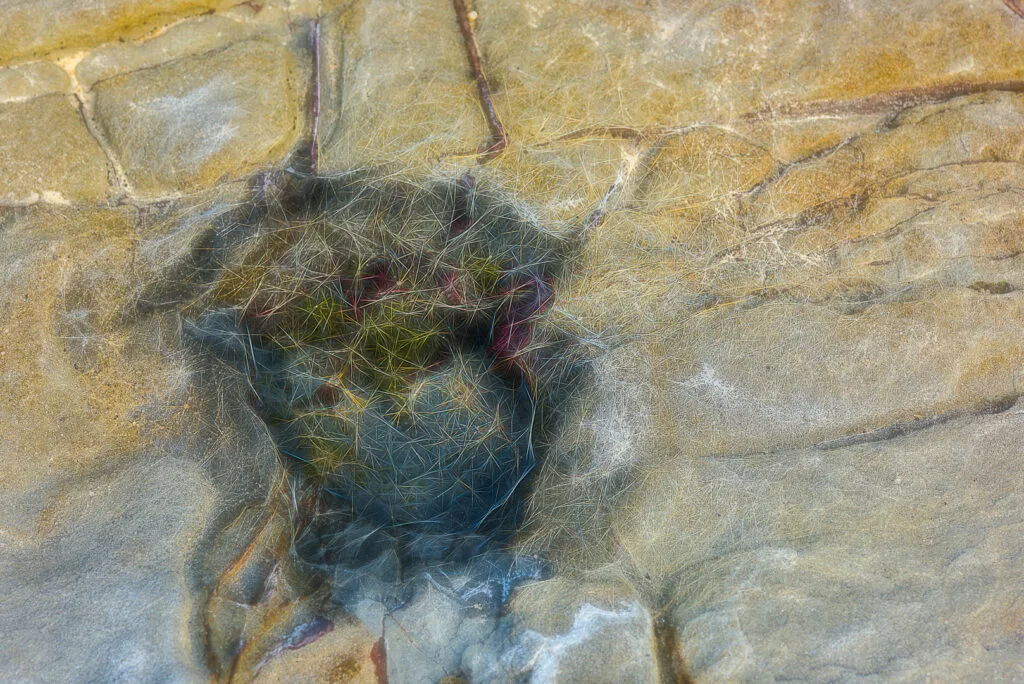
Beyond the main swimming area, a stretch of beach is dominated by rocks. The tide was receding, leaving the surfaces wet and small pools of water trapped in the hollows. I became fascinated by the textures, patterns and colours that nature had created.
By the time we left, I had taken around 1,000 photographs of rocks.
I wasn’t quite sure what I would do with them. I simply found the patterns interesting and wanted to explore their possibilities.
Looking back, that afternoon was the beginning of a creative journey that would occupy much of my spare time over the next three years.
Finding Something More in the Rocks
Back home, I began sorting and editing the photographs. As I worked through them, I started wondering whether the shapes, colours and textures could represent something beyond their physical appearance.
Some suggested movement or conflict. Others seemed peaceful, isolated or mysterious. I found myself looking for connections between what I could see in the rocks and what we experience as human beings.
One day, Marie asked what I was creating.
I replied that the images seemed to reflect different aspects of the human condition.
The phrase stayed with me.
For me, the human condition encompasses the experiences, emotions and behaviours that are part of being human. It includes our strengths and vulnerabilities, our relationships with others, and the sometimes contradictory ways we respond to life.
I began to wonder whether these natural textures could provide a visual language for exploring those experiences.
At that stage, I wasn’t thinking about a book. I was simply experimenting with an idea that interested me.
My initial concept was to present the images as specimen slides, almost as though I were examining different aspects of human existence under a microscope.
It was an unusual approach, but I wanted to see where it might lead.
Learning to See Through Other Eyes
In March 2021, I entered one image in the Open Section of Brisbane Camera Group’s monthly competition.
It didn’t score particularly well, although it received an Encouragement Award.
Rather than abandon the idea, I decided to seek a broader perspective.
Later that year, I entered ten photographs in the LensCulture Critics’ Choice Awards. My main motivation wasn’t necessarily to win an award. I wanted feedback from someone with no connection to me or the project.
The response was useful, although not entirely what I had hoped for.
The judge questioned some areas that appeared out of focus and suggested the series needed greater visual variety. Another important observation concerned the absence of an artist statement.
Because the statement was optional, I hadn’t provided one.
I began to appreciate that what seemed obvious to me might not be apparent to someone encountering the images for the first time.
I knew what I was trying to communicate, but the viewer didn’t have access to the thoughts and associations that had led me there.
This raised a question that would return throughout the project: How much explanation does an image need, and how much should be left to the viewer’s interpretation?
I didn’t want to tell people exactly what they should see or feel. At the same time, I needed to give them enough to engage with the work.
Finding that balance became an important part of the creative process.
When the Images Began to Change
As I continued experimenting, I moved beyond using the rock textures on their own.
I began compositing photographs of people into the images, often using photographs of myself. The human figure could suggest an emotional state or experience that might otherwise be difficult to communicate through texture alone.
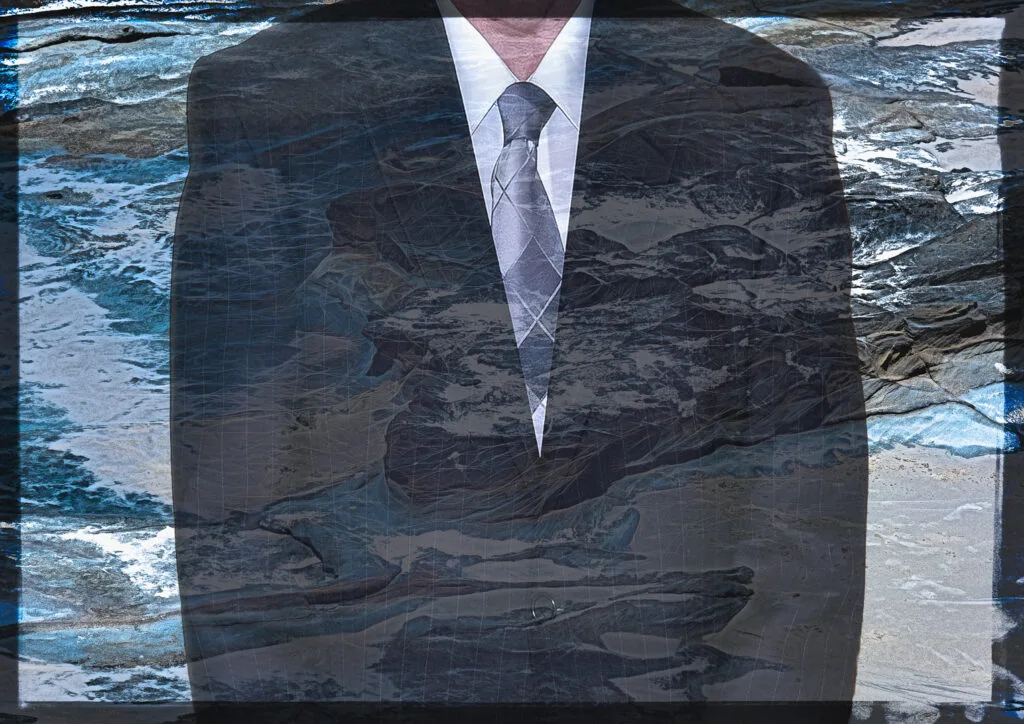
I was interested in the relationship between the figure and its surroundings. Could a person appear trapped within a rock formation? Could colour suggest anxiety, anger or calm? Could a shape become a symbol of isolation or connection?
In 2022, I submitted another ten images to the LensCulture Art Photography Awards.
Once again, the feedback challenged my thinking.
The judge suggested some compositions were too complex and questioned whether the figures communicated the intended emotions convincingly. They even suggested that trained actors might better express what I was trying to portray.
I could understand the criticism, although I wasn’t entirely convinced by every recommendation.
Human experience is rarely simple, and I didn’t necessarily want the images to offer a single, obvious interpretation. Some ambiguity was intentional.
Nevertheless, the feedback made me consider whether the complexity added meaning or simply made the images harder to understand.
There is a difference between an image that invites interpretation and one that leaves the viewer with too little to work with.
That distinction would become increasingly important.
From an Experiment to a Personal Project
In 2023, Brisbane Camera Group established a Personal Projects group. Members met monthly to develop photographic projects that mattered to them, share their progress, and receive feedback.
I joined with the intention of creating a collection of prints exploring different aspects of the human condition.
After the first couple of meetings, however, my ambitions changed.
I decided to make a photobook.
It seemed a more appropriate way to bring the images together. Rather than presenting a collection of individual works, I could create something that encouraged the viewer to move through a sequence of human experiences.
That decision introduced a whole new set of challenges.
I began researching each condition I wanted to represent, looking for symbols and visual ideas that might help communicate its meaning. Colour became an important consideration. I explored how different colour palettes could shape an image’s emotional atmosphere.
The rock textures remained the foundation, but the compositions became increasingly layered.
I also had to consider the practicalities of producing a book. What size should it be? Which printer would I use? How many images would it contain? How should they be arranged?
I chose a printer, downloaded the required templates and set myself the task of creating 30 images.
It felt like a substantial undertaking, but at least I now had a defined goal.
As it turned out, the project had other ideas.
The Unexpected Arrival of Poetry
By the time I had completed 33 images, I began thinking seriously about their sequence.
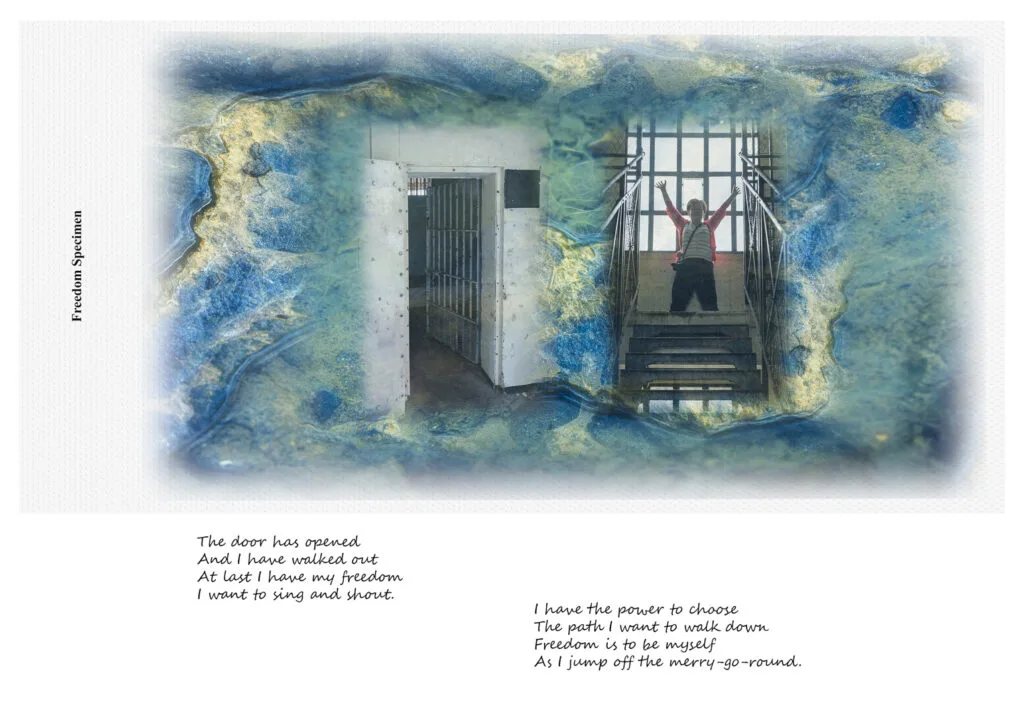
I wanted the book to feel like it had movement, with shifts in mood and subject matter that would encourage readers to keep turning the pages.
As I considered how the images related to one another, I felt an unexpected urge to write a lyric poem for each condition.
I hadn’t planned to include poetry.
Yet the more I worked on the words, the more natural the combination seemed.
The photographs offered one way of exploring a human experience, while the poems offered another. Sometimes the words reinforced what the image showed. At other times, they introduced a different perspective.
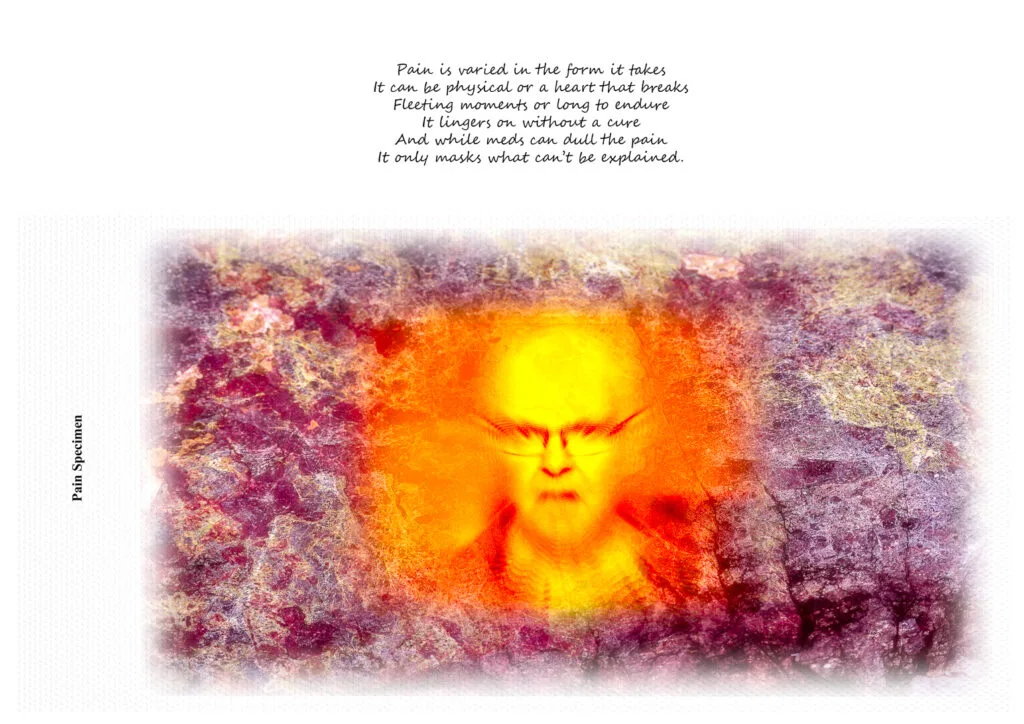
I didn’t want the poems simply to describe the photographs. I wanted each to contribute something of its own.
This changed the book.
It was no longer just a photographic exploration of the human condition. It had become a conversation between images and words.
There was one final surprise.
As I approached the final sequencing stage, a lyric poem came to me without a corresponding image.
Rather than discard the poem, I created another photograph to accompany it.
The book now contained 34 aspects of the human condition.
What started as a collection of rock textures became something I never could have anticipated that afternoon at Mooloolaba.
The Value of Slowing Down
With the images and poems largely complete, I began preparing the first draft for printing.
One of the Personal Projects group members offered to review the work before I committed to the print run.
I accepted, and I’m glad I did.
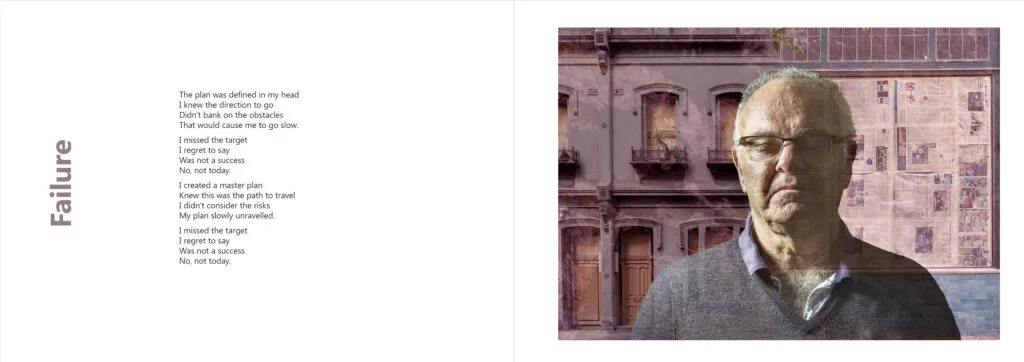
The feedback caused me to slow down and reconsider decisions I had become comfortable with.
Some images weren’t communicating what I had intended. Others needed refinement. The poems also benefited from more attention, and the book’s sequence required substantial revision.
At first, I concentrated on individual images and whether each successfully represented its particular condition.
Now I needed to think about the experience of reading the book as a whole.
Would the sequence maintain interest? Were there too many visually similar images together? Did the emotional tone vary sufficiently? Was there enough space for the reader to absorb what they had just seen?
I began to understand that a photobook is more than a collection of photographs placed between two covers.
Its design and sequencing influence how the work is experienced.
An image that works well on its own may not be effective in a particular position. Two individually strong images may compete with one another when placed together.
I experimented with image sizes, page layouts and areas of white space. I wanted moments of visual intensity, but also quieter passages where the reader could pause.
It was a different kind of creative challenge, one that required me to think less like the person who had made the photographs and more like someone encountering them for the first time.
The Challenges I Hadn’t Anticipated
Not everything went smoothly.
The printer I had originally selected went out of business, leaving me to search for an alternative that could produce the format I had planned.
For a while, I worried I might have to redesign the entire book.
The software also became an issue.
I was increasingly frustrated by the limitations of the tools I had been using. I knew how I wanted the pages to look, but achieving that result was proving difficult.
Eventually, I decided to learn Adobe InDesign.
It was a steep learning curve, especially so late in the project, and it added unnecessary stress.
In hindsight, I would have investigated the design requirements much earlier.
Nevertheless, learning the software gave me greater control over the finished book. I could make the layout decisions I wanted rather than compromise because of the tools available.
These practical difficulties weren’t the most exciting part of the project, but they reminded me that turning a creative idea into something tangible requires more than inspiration.
There are decisions to make, problems to solve and, occasionally, plans to abandon.
Finally, a Book
In August 2024, I self-published Aspects of the Human Condition.
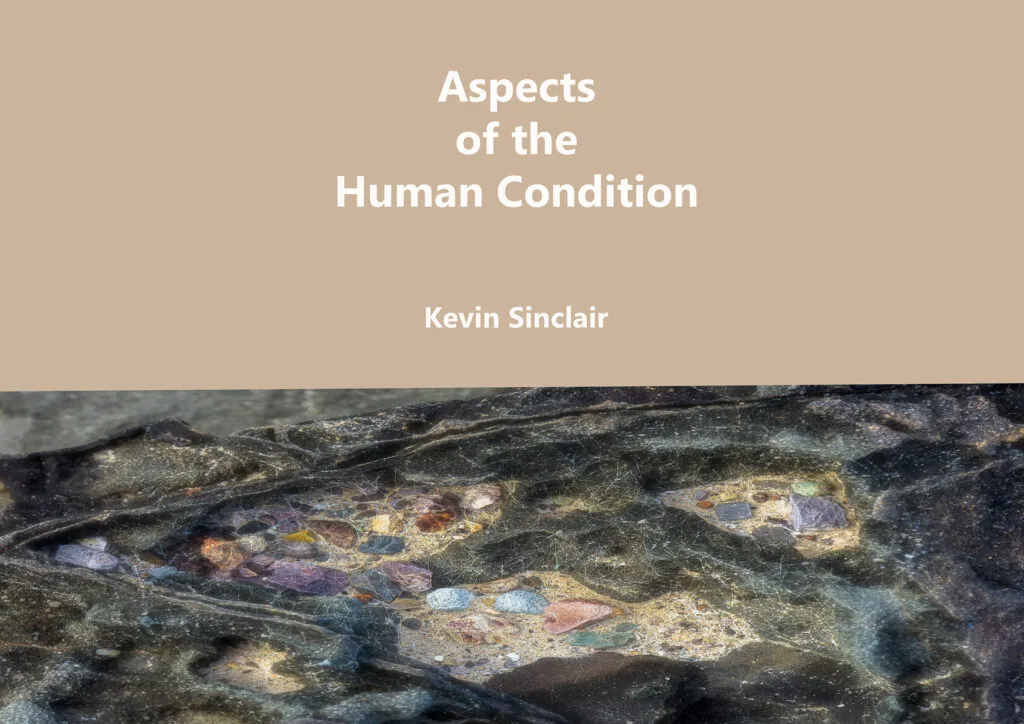
More than three years had passed since I photographed those rocks at Mooloolaba.
The finished book was quite different from anything I had imagined when I first began exploring the textures.
It brought together 34 photographic interpretations of human experiences, each accompanied by a lyric poem.
I was pleased with the result, but what stayed with me was the process of getting there.
I had started with no clear destination. The project developed through curiosity, experimentation, outside criticism, changes of direction and a willingness to revisit work I had thought was finished.
Some ideas survived from the beginning. Others disappeared along the way.
The specimen-slide concept, which had initially seemed such a promising approach, eventually gave way to something quite different.
I also learned that feedback is most valuable when I approach it with an open mind without feeling obliged to accept every suggestion.
The aim isn’t to satisfy everyone who sees the work. It is to understand what others are experiencing and decide whether that aligns with what I want to communicate.
Sharing the Journey
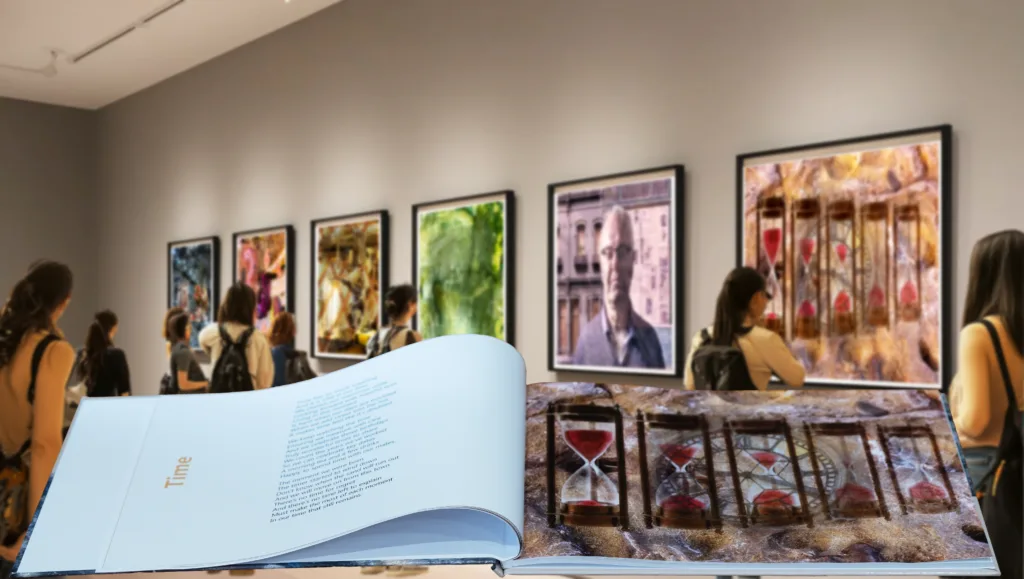
One highlight came after the book was finished, when Brisbane Camera Group invited me to present to its members about the journey from those first photographs at Mooloolaba to the completed book.
I thoroughly enjoyed the experience.
There was something particularly satisfying about standing in front of fellow photographers and sharing how the project had developed. Many of them understood the challenges of taking an idea from its earliest stages to a finished piece of work.
I brought a copy of the book, along with many of the prints I made during its development.
Those prints told part of the story that wasn’t immediately apparent from looking at the finished pages. I had spent considerable time printing and reviewing images, checking compositions, adjusting colours and making changes until I was satisfied they would reproduce as intended.
Some images had gone through several revisions before I felt they were ready.
Showing those earlier versions alongside the finished book helped illustrate how much the project had evolved.
I felt proud of what I had achieved, but I also got a real buzz from sharing the experience. After spending so much time working on the project largely on my own, it was rewarding to talk about it with people who shared my interest in photography.
And perhaps that was one of the unexpected pleasures of the whole undertaking. What had begun as a personal exploration had become something I could share with others, not just through the finished book, but through the story of how it came to be.
Where the Journey Leads Next
When I think back on the project now, I return to that afternoon at Mooloolaba.
I had no idea that photographing a collection of wet rocks would lead to three years of experimentation, a book combining photography and poetry, and eventually the opportunity to share the whole experience with fellow photographers.
The project also changed the way I think about my creative work.
I became more comfortable experimenting with ideas that weren’t fully formed. I learned to value feedback without feeling obliged to follow every suggestion. And I discovered how photography and lyric poetry could complement one another in ways I hadn’t previously considered.
Perhaps most importantly, I learned that a creative project doesn’t always reveal its full possibilities at the outset.
Sometimes we need to work with an idea for a while before we discover what it might become.
I plan to write a second volume and hope to begin working on it in 2027.
I don’t yet know exactly what form it will take, and I’m comfortable with that.
After all, the most interesting creative journeys don’t always begin with a clear idea of where we’re going.
Sometimes they begin with nothing more than noticing something that others might walk past.
In my case, it was a collection of wet rocks on a beach.
Interested in a print of any of these photos? Get in touch.