
What our photographs reveal long before we realise they are revealing us.
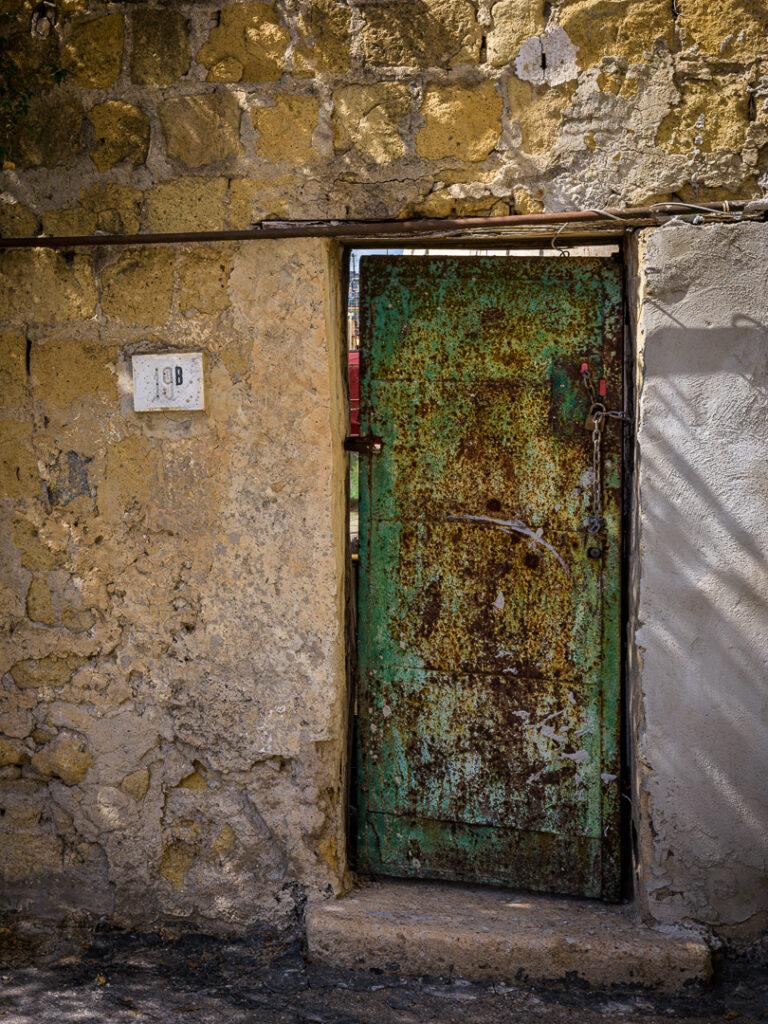
Marie and I were standing only a few meters apart when I photographed an old green door.
The light was identical.
The weather was identical.
We were looking at the same scene.
Yet when we compared our photographs later, they looked as though they had been taken in different places.
Mine was a study of an old, weathered door.
Hers captured a couple walking past as an in-camera multiple exposure.
That’s when I found myself wondering:
Were we really photographing the same place? Or were we photographing something of ourselves?
I have had similar experiences when out with other photographers. One of us may take the overall shot while the other takes a photo of a subject or object within that scene.
These simple experiences often leave me wondering:
Were we really photographing the same place?
Cameras Record Light. People Choose Meaning
Early in my photography journey, I thought that cameras made the photographs. A better camera or lens would improve the photographs I was taking.
It took me some time to realise that a camera records:
- light
- colour
- texture
I eventually realised something much more important. The person behind the camera has the greatest impact on the photographs being taken.
As a photographer, I make many decisions that determine the output from the camera.
I am deciding:
- where to stand
- what to exclude
- when to press the shutter
- what deserves attention
- which aperture to use
- what shutter speed
- whether to even take the photo.
My photograph begins long before I press the shutter.
Every photograph contains a series of personal choices.
We Photograph What Matters to Us
Our interests shape what we notice. Marie likes to have people in her photographs. She tells me my landscapes are boring because they contain no people.
She can produce some amazing in-camera multiple exposures of street scenes and architecture. Out of curiosity, I have tried it but produce messy images.
I admire what she creates, but it isn’t how I naturally see the world.
And that’s fine. We each have our own subjects we like to photograph.
I have noticed the same with my photographer friends. Some are drawn to:
- architecture
- people
- wildlife
- grand landscapes
- tiny details
- reflections
- abandoned buildings.
None is more correct than another.
Each reveals something about the photographer.
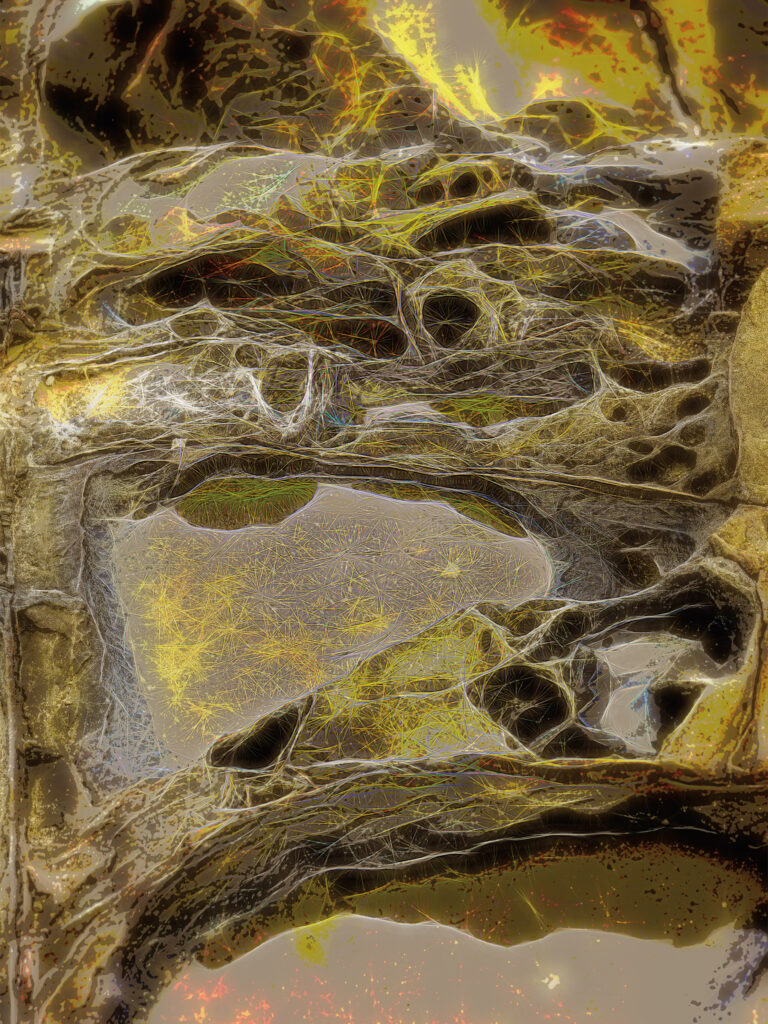
Available as a print: Rock Study III
These days I rarely chase spectacle.
I’m more interested in quieter things.
The photographs I come home with are often the ones other people walk straight past.
Now I am looking for:
- stillness
- quiet streets
- reflections
- weathered textures
- empty beaches
- places that invite contemplation
My portfolio becomes a map of my values.
Photographs Reveal Our Stage of Life
When I first started using SLR cameras in my 20s, I focused on documenting my travels and taking photos at family occasions. I read books on how to improve my photography and learned about depth of field and many useful rules of thumb I can barely remember now.
In my twenties, I photographed holidays and family gatherings. Photography was something I fitted around the rest of life.
Later, work and family responsibilities narrowed my attention even further.
My photographs became records of where I had been rather than expressions of what fascinated me.
When I decided to take up photography as a serious hobby about 12 years ago, I started with a DSLR and focused on learning this new tool of trade. I was fascinated by the possibilities before me with tools like Photoshop.
Camera club competitions taught me discipline, but they also encouraged me to photograph what judges rewarded rather than what genuinely interested me.
I was always drawn to the conceptual style of photography, using Photoshop as a tool to combine different images to express what I wanted to say.
Today’s photographs are different.
I still enjoy my conceptual work, but I also now find myself noticing:
- silence
- ordinary beauty
- familiar places
- patience
- atmosphere
My camera hasn’t changed.
I have.
What We Leave Out Matters Too
Over several years, I have realised that every photograph I take is an act of exclusion. With a three-hundred-and-sixty-degree view before me, I decide which part of that view I will include in my frame.
Everything outside the frame disappears. The rusty shed to the left has been left out, and when I look back, I won’t even remember it was there.
Each choice I make reveals what my priorities are. I don’t notice it when I press the shutter button.
However, looking back over the years, I can begin to see the patterns. My landscapes rarely included people unless there was just no way that I could avoid them. They were all taken with a wide angle. It wasn’t until much later that I started to use a telephoto lens for some landscape photos.
The only people I photographed were family and friends. The thought of taking candid street photos was something I would never consider.
My photographs revealed not only what interested me. They revealed what never attracted my attention.
That absence says something too.
Looking Through Old Photographs
Now, when I revisit my archive, I no longer ask myself “what did I photograph?”
Instead I have begun asking “What was I noticing then?”
When we change our questions, we start to discover different things. This process of self-discovery can be very rewarding as I look back over my growth as a person and as a photographer.
My old photographs have become mirrors.
I recognise:
- curiosity
- ambition
- uncertainty
- confidence
- peace
Each season of my life has left its fingerprints on my photos.
My photographs quietly document my emotional evolution.
Perhaps Every Photograph Is a Self-Portrait
I now see that a self-portrait isn’t always a picture of my face.
Sometimes it can be a picture of:
- what I value
- what I fear losing
- what brings me peace
- what I hope for
- where my attention naturally rests
Perhaps that is why photographers slowly develop recognisable styles.
They are not repeating techniques.
They are revealing themselves.
Closing Reflection
I often think back to that green door, and the photos my wife took from the same location.
Neither is better.
Neither is more truthful.
Each simply tells the truth about a different person.
Every time I press the shutter, I think I am photographing the world.
Every time I press the shutter, I think I’m photographing the world.
Looking back, I realise I’ve also been photographing the person standing behind the camera.
Perhaps every photograph is a self-portrait.
We simply don’t recognise ourselves in it until enough time has passed.
Originally published in Full Frame, The Art of Photography
Interested in a print of any of these photos? Get in touch.