
The photographs we return to often preserve not an instant, but the person we were becoming.
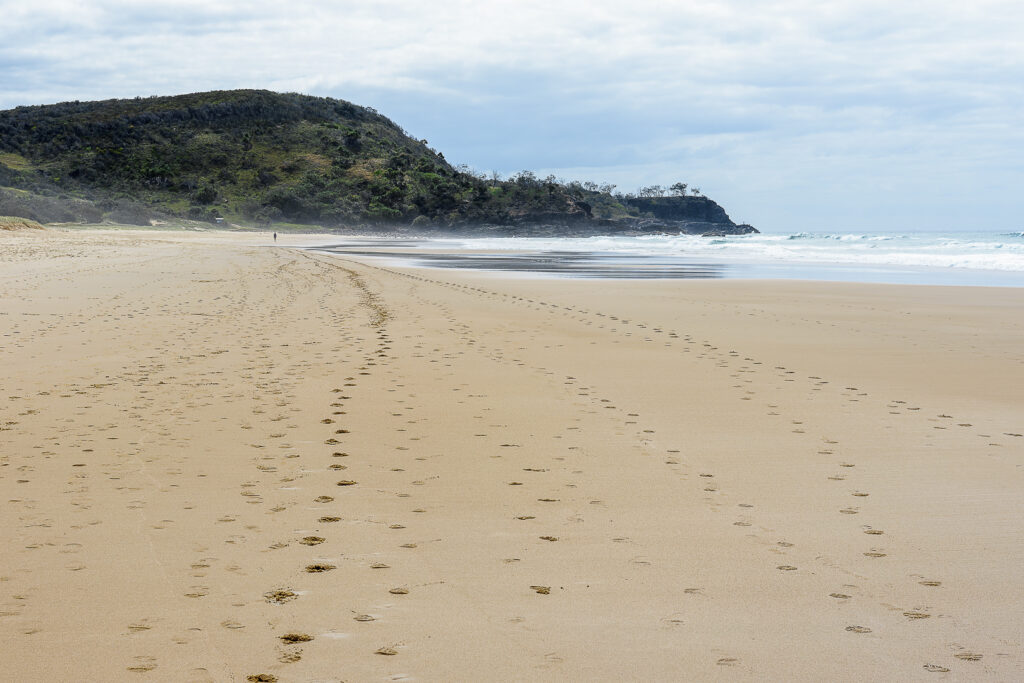
I wasn’t looking for this photograph. I was searching for something else entirely when it appeared on my screen.
At first, it seemed unremarkable, one of thousands filed away over the years. Then something unexpected happened. It didn’t remind me of the afternoon I pressed the shutter. I couldn’t tell you the weather or what happened next.
Instead, it carried me back to an entire season of my life.
I was still working then, counting the years until retirement while wondering how I had ended up in a role that seemed to value everything that I believed I had to offer. Looking at that ordinary photograph, I could almost feel the atmosphere of the office again, the frustration, the quiet determination to leave with my integrity intact.
The photograph hadn’t preserved a moment. It had preserved the person I was becoming.
We Think Photographs Freeze Time
When we talk about photographs, we usually say that they capture an instant in time. They are documents of moments in our lives for us to look back on and remember. Photographs also document moments in the history of our society and how we lived.
Documentary photography plays an important role in recording our history. They truly are moments in time. Photographs taken during the great depression clearly document the hardship many people experienced. War-time photography clearly shows the horrors of conflict.
I used to think the photographs I created were simply a way to document my life.
Birthdays with candles waiting to be blown out. Holidays that now blur into one another. Weddings. Family gatherings. Milestones that seemed important enough to preserve forever.
At the time, I believed I was recording events.
Looking back, I realise I was unknowingly recording the person living through them.
A frame only captures the part of the scene the photographer chose to include. Looking back, who knows what was happening outside the frame and whether it even matters.
Slowly, I have come to realise our brains store memories differently from the way a camera captures a moment in time. Our memories are stored as fragments and colored by feelings.
When I revisit my old photographs, my brain reconstructs stories rather than replaying isolated events. These stories are strongly influenced by the emotions I experienced when the memories were stored in my brain.
Photography appears to preserve moments.
Memory preserves meaning.
The older I become, the more I realise that some images represent years rather than seconds.
One Photograph Can Hold an Entire Life Chapter
When we look back on our lives, we don’t necessarily split the past into decades. Often, we categorise experiences into sections that can overlap with other sections. For example, one section may cover a career, while another may cover the courtship of a life partner. Parts of the career section overlap with the courtship section because it covers a longer time frame.
We spend years raising children and have countless photos of those times. Each photo is a moment captured. Looking at one of these photos in isolation can symbolise the years we spent with our children rather than that individual moment.
One photograph can come to represent years spent caring for ageing parents. Another can quietly contain the uncertainty of beginning a career or the exhilaration of falling in love. An ordinary holiday snapshot may later become the symbol of a marriage that shaped the rest of your life.
The image itself has not changed. What has changed is everything we bring to it.
I have started to think the photograph has become an emotional shorthand. Looking at the photo stimulates an emotional memory, and my brain builds on that. It doesn’t replay the moment like a video.
When I see an ordinary photograph I have taken of Snapper Rocks, I am not reminded of the beach itself. I recall the years when Marie and I regularly escaped there together and how life seemed to slow down. I recall the magic of each visit being different but still having a lasting impact.
The photograph becomes less a destination than a doorway, inviting me back into a version of life that exists now only in memory.
Why Memory Works This Way
Our memory is not a giant filing cabinet where every experience is stored neatly for future reference.
Our brains are selective in what they store. They constantly decide what deserves to be kept and what can safely disappear. Emotion is one of the strongest signals our brains use when deciding what deserves to be remembered.
Our minds naturally organise experience into meaningful chapters rather than isolated scenes.
When I think back to my early years at school, I struggle to remember what the classrooms looked like or details of the playground.
What I remember instead is sucking on a lead pencil and my teachers being worried and sending me to my mother, who was working at the time. The lady in reception gave me an ice cream while I waited for my mother. The ice cream removed all the colour from my mouth left by the pencil, and I was cured.
The emotional experience survived while the physical details quietly slipped away.
The same pattern appears throughout life.
My photographs have become anchors for these larger narratives.
The picture isn’t valuable because of what is visible.
It matters because of everything invisible that surrounds it.
Looking Back With New Eyes
When I look back over my photos, they haven’t changed. Each time I look at them, I am looking with new eyes, and meaning grows and changes.
That is why a photograph I once ignored can become meaningful over time. As I change, I can see meaning where I couldn’t before. Each time I revisit that photo, the meaning can grow as new layers are added.
An image once appreciated for technical reasons may now evoke gratitude, nostalgia or sadness.
Sometimes I discover that I was happier than I realised.
Sometimes I discover I am quietly changing.
My photography becomes less about recording the world and more about documenting my own evolution.
The photograph has been patiently waiting for me to become the person capable of seeing it differently.
The Seasons That Shape Us
The older I become, the more I think life resembles the changing seasons. Each season has a purpose, and all are needed for the life we experience. My life seasons also have purpose, though I may not understand that at the time.
Some seasons are joyful.
Some are exhausting.
Some feel ordinary while I am living them.
It is by looking back and reflecting that I gain an understanding of their purpose and significance.
A period of boredom and blocked creativity is often followed by activity and strong creative output. Looking back, I can see that I needed the rest to quietly nurture the creativity that followed.
I once wondered why happiness could not be constant. Age has taught me that contrast gives joy its shape. Without difficult seasons, the gentle ones might pass unnoticed.
Life does not run smoothly.
The photographs survive as markers along the journey.
Not milestones.
But signposts.
Closing Reflection
After reflecting on the chapter of my life stimulated by my opening photograph, I couldn’t help myself. I checked the metadata to find out exactly when I photographed it.
Knowing the date added nothing.
I still have no memory of the moment I pressed the shutter button. Or of what happened next.
Yet I know exactly what season of my life it represents.
Perhaps the photographs we treasure most aren’t the ones that captured the perfect moment.
They’re the ones that remind us who we were becoming while life quietly unfolded around us.
Some photographs preserve a fraction of a second.
The rare ones preserve an entire season of a life, waiting patiently until we become the person capable of understanding what they quietly kept for us all along.

Originally published in Full Frame, The Art of Photography